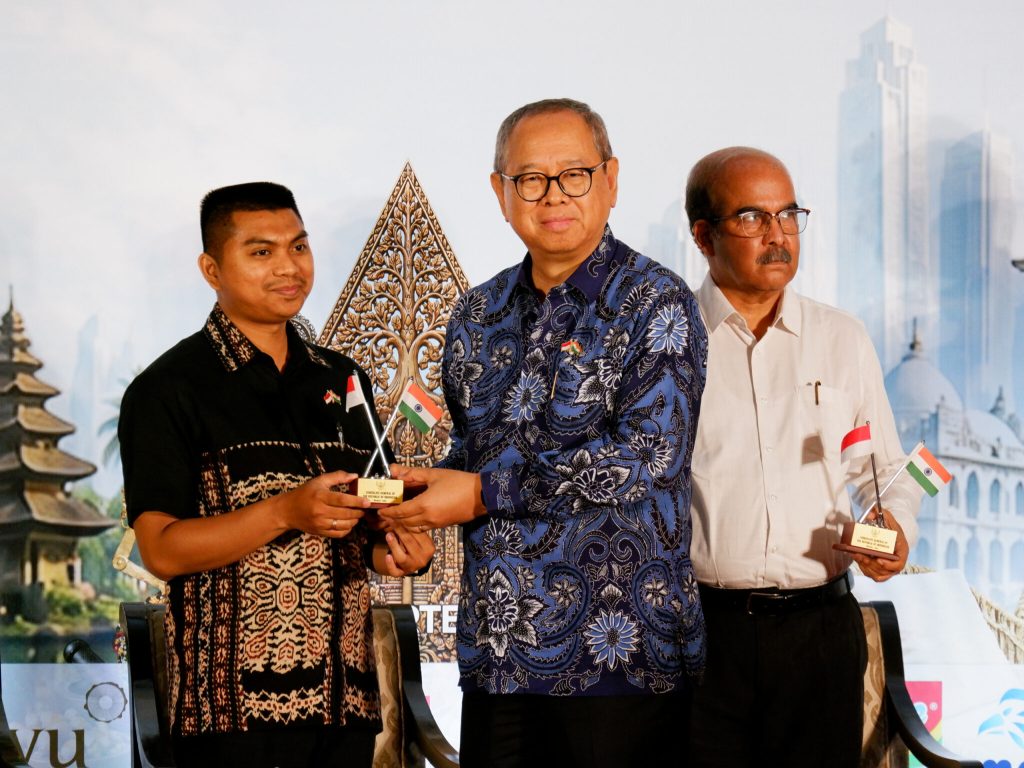
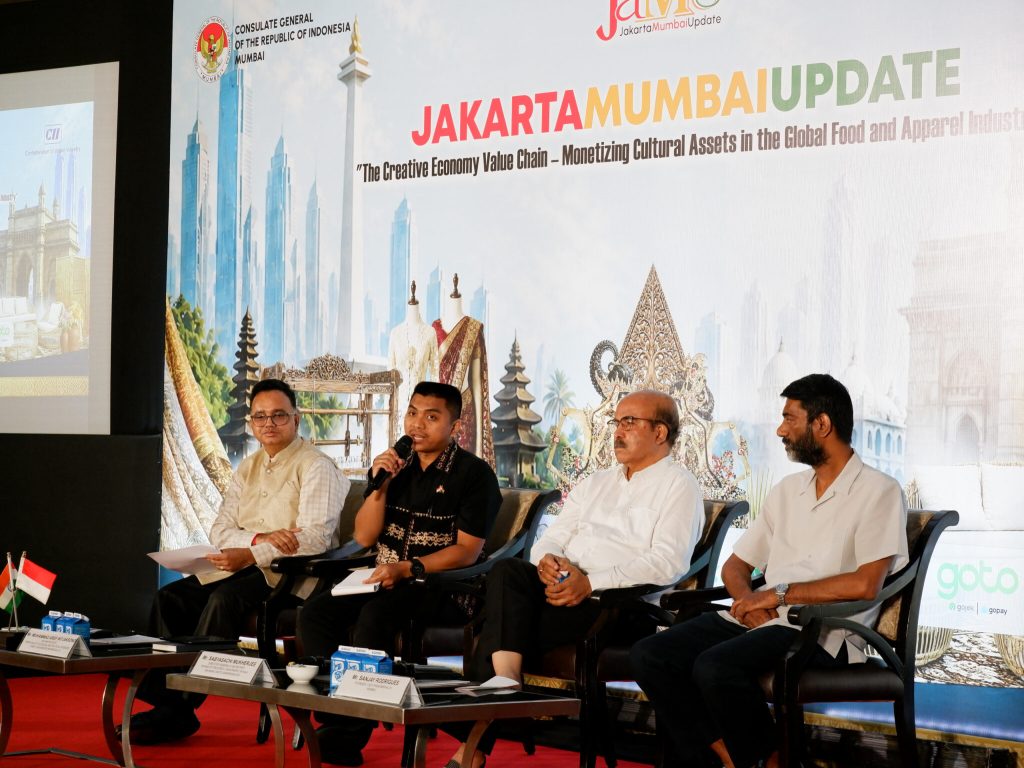
The Consulate General of the Republic of Indonesia (KJRI) in Mumbai once again organized the Jakarta-Mumbai Update Forum (JAMU) 2026. Now in its second year, the forum focused on the theme “The Creative Economy Value Chain – Monetizing Cultural Assets in the Global Food and Apparel Industry.” Held in Mumbai, India, on 26 June 2026, the event brought together various strategic economic partners of Indonesia in India.
I was invited by the Indonesian Consulate General in Mumbai to participate as one of the speakers in the first session, entitled “The Foundation,” representing the Department of Anthropology, Faculty of Social and Political Sciences, Universitas Indonesia.
In my presentation, I highlighted several fundamental aspects of developing and managing the creative economy from a sociocultural perspective. First, I invited participants to reflect on the shared characteristics of Indonesian and Indian societies as an important foundation for strengthening cooperation in the creative economy. I argued that both societies are deeply relational, where social relationships play a central role in shaping various aspects of everyday life. Moreover, neither Indonesian nor Indian societies necessarily view tradition and modernity as opposing forces. Instead, traditions can serve as sources of inspiration for new innovations across creative sectors, including fashion, film, culinary arts, and digital industries.
I also discussed the strong storytelling cultures shared by Indonesia and India. In both societies, knowledge is transmitted not only through written texts but also through stories, performances, songs, theatre, and oral traditions. I suggested that these cultural characteristics provide an important foundation for the development of contemporary creative industries, including films, television series, animation, digital games, and social media content.
Furthermore, I emphasized that the creative economy should not be understood solely in terms of increasing economic value or expanding mass production. I proposed that two interconnected dimensions need to be developed simultaneously. The first is a heritage-based creative economy that emerges from communities through traditional practices, small and medium-sized enterprises, and grassroots economic activities. The second involves the development of contemporary creative industries driven by digital technologies and artificial intelligence (AI). Rather than treating these dimensions separately, I argued that they should be understood as parts of an interconnected ecosystem, linking various actors and processes across the entire value chain.
I further stressed that efforts to strengthen the creative economy must begin with the people and communities directly involved in cultural production. Before discussing the economic benefits at the national level, we must first ensure that artisans, artists, designers, filmmakers, game developers, and other creative practitioners have access to a supportive ecosystem. This includes adequate legal protection, access to intellectual property rights, and opportunities for sustainable development.
Another important issue I raised was the ethical dimension of transforming cultural heritage into economic resources. I emphasized that the commercialization of culture must avoid practices of cultural appropriation that may marginalize the very communities whose cultural knowledge and practices are being utilized. In this regard, I highlighted the importance of applying the principle of Free, Prior and Informed Consent (FPIC). This principle requires ensuring that communities receive sufficient information, have the freedom to grant or withhold their consent, and benefit fairly from the use of their cultural heritage.
As an anthropologist, I also believe that the role of academics should extend beyond conducting research on history and culture. We have a responsibility to bridge cultural heritage and the needs of contemporary societies through innovations that remain grounded in principles of social justice. Transforming cultural heritage into new creative forms, such as digital games, films, design, and fashion, can open up important opportunities. However, such transformations must involve the active participation of the communities to whom these cultural traditions belong, ensuring that the resulting economic benefits are distributed more equitably.
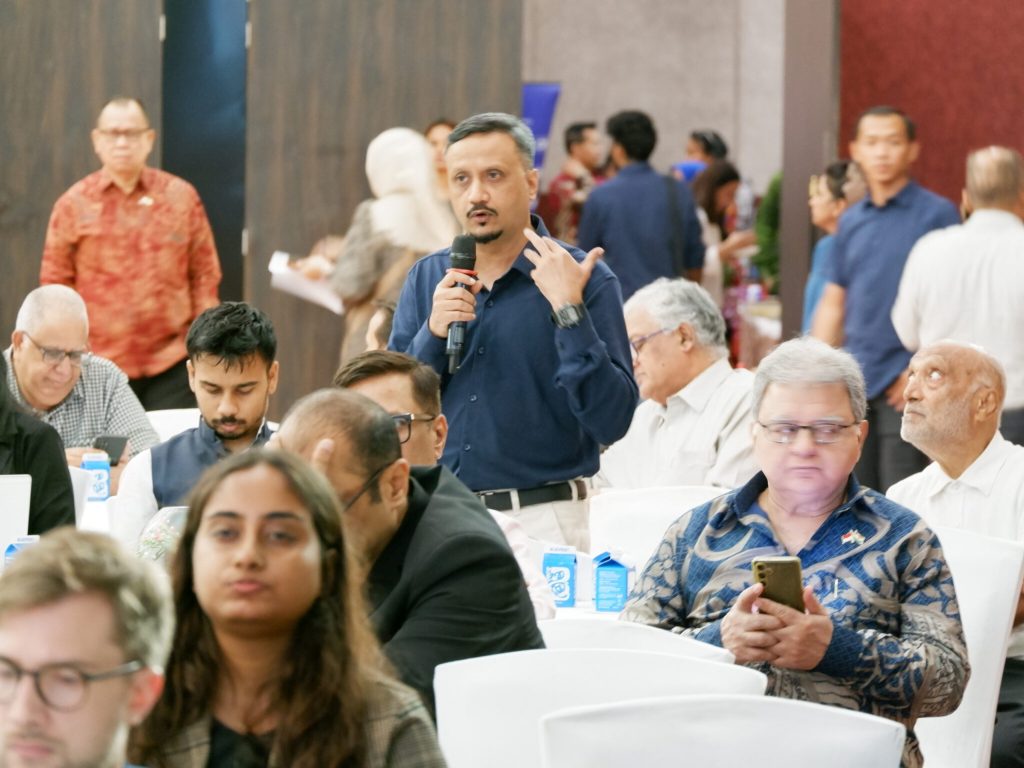
During the discussion session, I shared several ideas for strengthening cooperation between Indonesia and India in the field of heritage-based creative economies. One of my proposals was to establish partnerships among cultural communities, universities, research centres, museums, creative studios, and industry stakeholders through the development of heritage labs as collaborative spaces for cross-sectoral engagement. I also proposed establishing creative economy incubators for younger generations. These incubators would not only support innovation and branding but also connect creative communities with potential markets in both countries.
I concluded by emphasizing that Indonesia and India already have numerous creative communities that have developed independently and demonstrated remarkable creativity and resilience. The main challenge today is not necessarily to establish new communities, but rather to create a shared platform that can connect existing ones. Such a platform could facilitate collaboration, knowledge exchange, and the development of creative industries between Indonesia and India in a more integrated and sustainable manner.


Tinggalkan Balasan