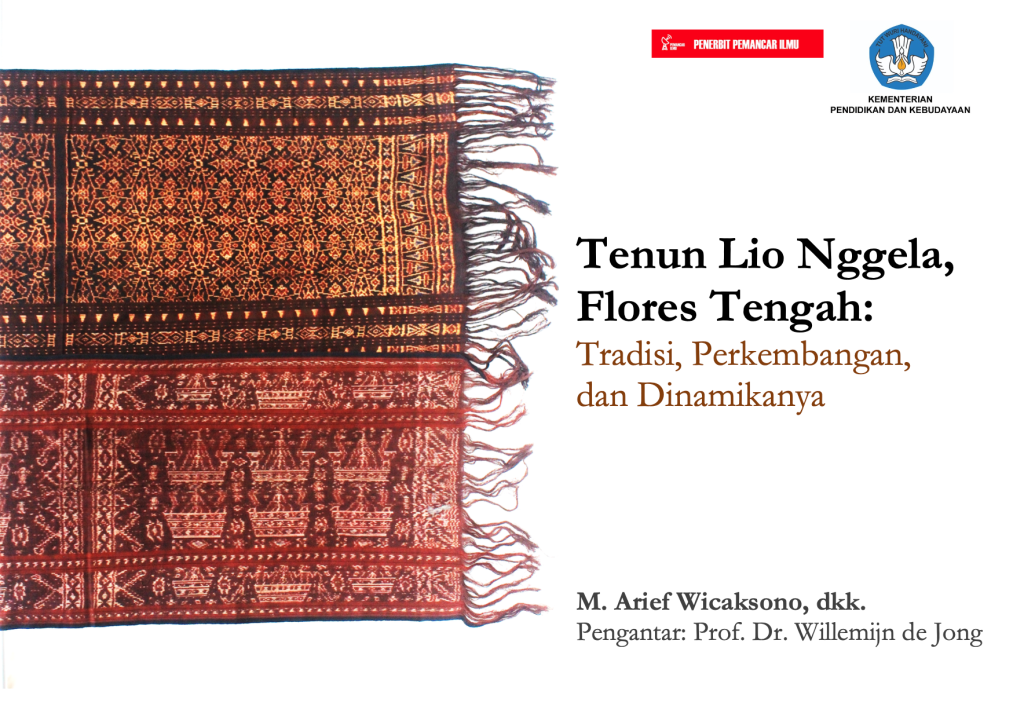
This book presents an in-depth exploration of the traditional weaving practices in Nggela, a village in Central Flores, Indonesia. Authored by M. Arief Wicaksono and colleagues, and introduced by Prof. Dr. Willemijn de Jong, the text delves into the cultural significance, social dynamics, and economic aspects of weaving within this community. The study, part of the Cultural Field Facilitation Program 2020 by the Directorate General of Culture, Ministry of Education and Culture of Indonesia, highlights the rich textile tradition of Nggela and its critical role in sustaining the village’s socio-cultural fabric.
At the heart of Nggela’s weaving tradition lies the intricate process of creating ikat textiles, a practice predominantly carried out by women. This craft is not only a source of economic livelihood but also a medium of cultural expression and social identity. The book meticulously details the various types of traditional textiles, including sarung (skirts), selendang (shawls), and their symbolic motifs, revealing the deep-rooted connections between the weavers, their ancestors, and the natural environment. The complex process of ikat weaving, involving tie-dyeing the threads before weaving them into vibrant patterns, is described as a blend of skill, artistry, and spiritual practice, reflecting the community’s worldview and cosmology.
“Weaving Resilience” also examines the challenges and transformations within the Nggela weaving community, particularly in the face of modernization and external influences. It discusses the gradual shift from natural dyes to chemical dyes, changes in motif designs due to market demands, and the impact of these changes on the traditional value and meaning of the textiles. Despite these challenges, the book portrays the community’s efforts to preserve and adapt their weaving traditions, highlighting initiatives for sustainable practice and cultural revitalization.
Moreover, the narrative underscores the role of weaving in Nggela’s social and economic exchanges, illustrating how textiles serve as vital components in ceremonial exchanges, marriage transactions, and as markers of social status and identity. The book provides insight into the dynamics of gender roles within the weaving practice, where women’s expertise and economic contributions through weaving strengthen their status within the community.
Ultimately, “Weaving Resilience” is a testament to the enduring spirit and resilience of the Nggela community in preserving their weaving heritage. It advocates for the recognition and support of traditional crafts as living cultural heritage, essential for the continuity of cultural identity and sustainable development. Through detailed ethnographic research, the book contributes significantly to our understanding of the interplay between tradition and modernity in the globalized world, emphasizing the importance of cultural heritage as a source of resilience and innovation.
 Mochammad Arief Wicaksono
Tinggalkan komentar