The book “Sejarah Baru Tarung: Lanskap Etnografi Revitalisasi Kampung Adat” meticulously explores the cultural, social, and architectural heritage of the Sumba people in Indonesia, focusing on the aftermath of a devastating fire that ravaged traditional villages. Written by M. Arief Wicaksono, Fachri Muzaqii, and Ridho Kusuma, this ethnographic landscape study is rooted in a comprehensive fieldwork initiative under the Revitalization of Traditional Villages Program by Indonesia’s Ministry of Education and Culture in 2018.
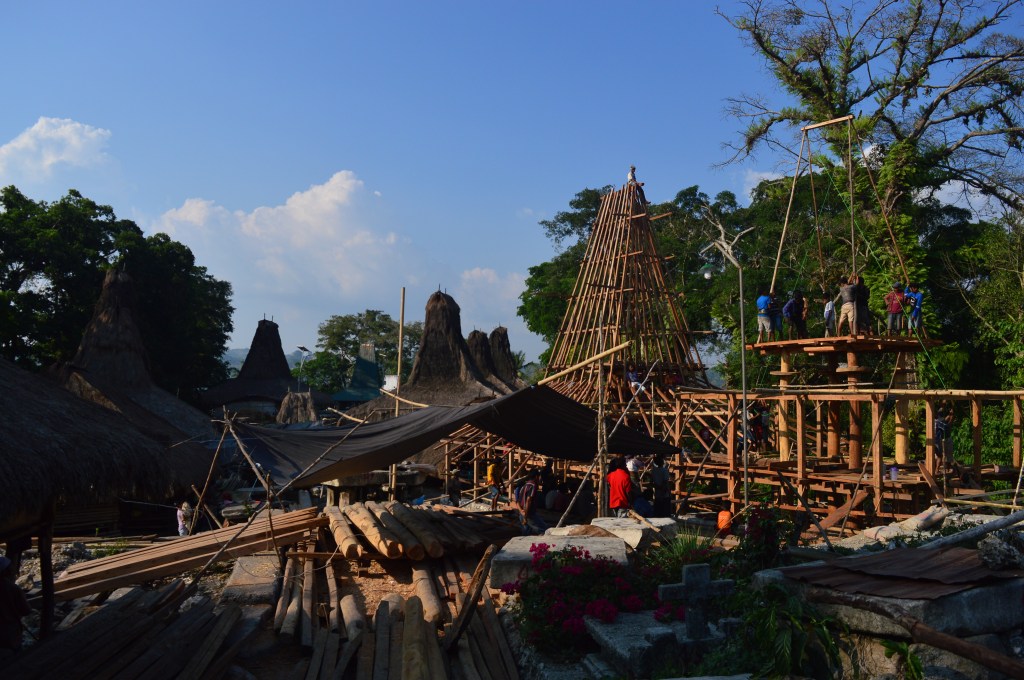
The narrative begins with a vivid recounting of the fire incident, emphasizing the resilience of the Sumba community. Despite the destruction of material structures, the spirit of the villagers remained unbroken, showcasing their profound connection to their ancestral lands and traditions. The fire, rather than ending their cultural practices, ignited a collective effort to rebuild, reflecting on the symbiotic relationship between the people and their environment, as well as their unyielding commitment to their cultural identity.
Central to the book is the exploration of Marapu, the indigenous belief system of Sumba, detailing its cosmology, rituals, and the pivotal role it plays in structuring Sumbanese society. The authors delve into the intricate relationship between the physical and spiritual realms within the Marapu faith, illustrating how this belief system guides daily life, community organization, and the architectural design of traditional Sumbanese houses, known as Umma.
The architectural elements of Umma are meticulously detailed, revealing how these structures are not only homes but also vessels of cultural and spiritual significance. The rebuilding process is described as a communal act of resilience, faith, and identity reaffirmation, underpinned by traditional knowledge and practices. This part of the narrative serves as a testament to the community’s efforts to preserve their heritage in the face of modernization and external pressures.
Lastly, the book reflects on the broader implications of the revitalization project, advocating for the preservation of indigenous knowledge and cultural heritage. It underscores the importance of community involvement in heritage conservation efforts and the need for a balanced approach that respects traditional values while embracing beneficial modernization. Through the story of Sumba’s recovery and revitalization, the authors contribute to the global discourse on cultural preservation, resilience, and the dynamic nature of traditional societies navigating the challenges of the contemporary world.
 Mochammad Arief Wicaksono
Tinggalkan komentar